FreeLLMAPI Puts 34 Free AI Tiers Behind One API Key (2026 Guide)
Every serious AI lab ships a free tier — a few million tokens a month here, a few thousand requests a day there. Individually they're toys. The idea behind FreeLLMAPI, an open-source project that has exploded on social media this week, is simple: stack enough of those free tiers behind one smart router and you get something genuinely useful — the project's README claims roughly 7.4 billion tokens a month of working capacity across 34 providers and 635 model endpoints, all reachable through a single OpenAI-compatible key. Here's what it actually does, how to set it up, and the catches.
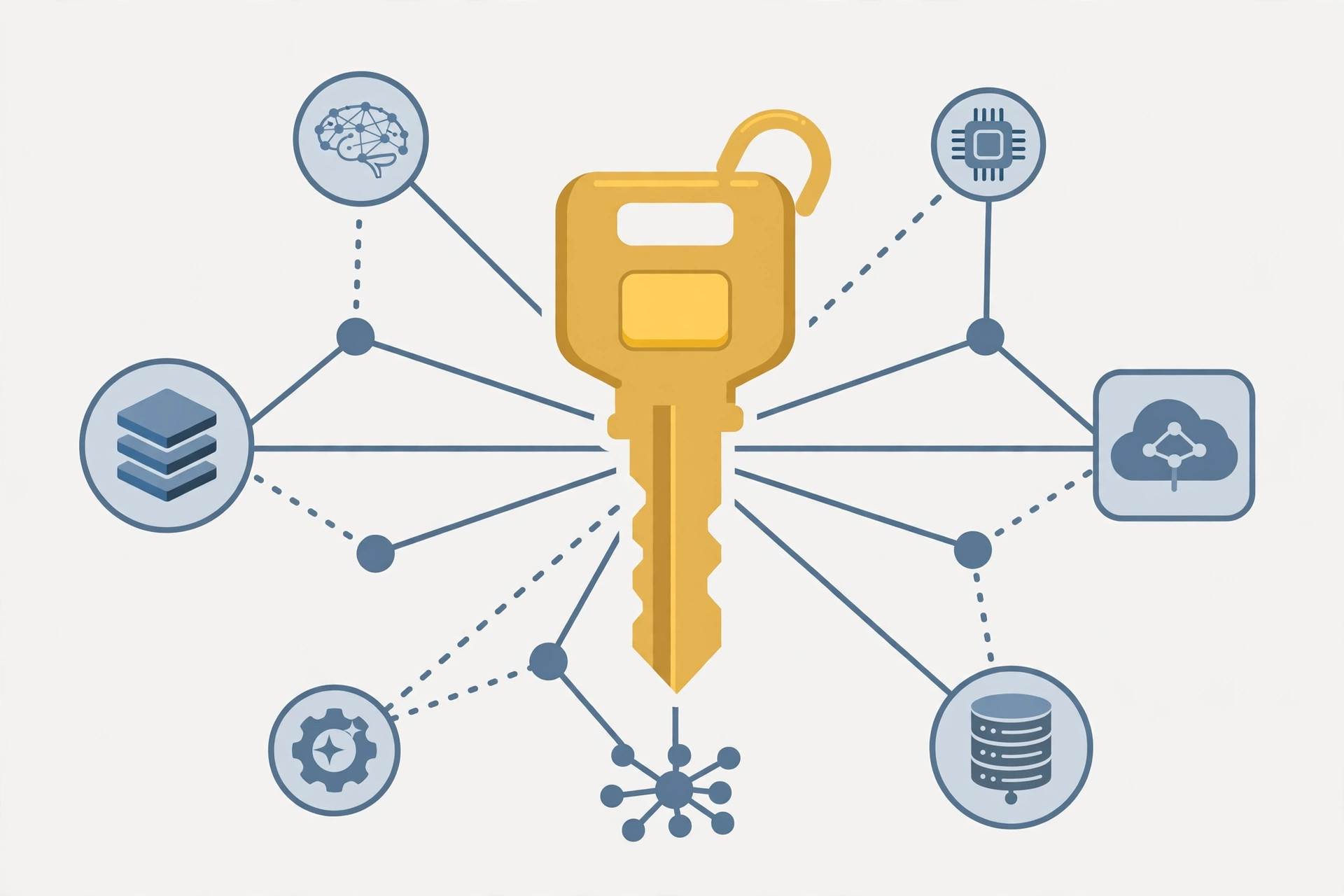 One key, 34 free tiers
What FreeLLMAPI is
FreeLLMAPI is a self-hosted, MIT-licensed router. You install it on your own machine, add your free-tier API keys from providers like Google, Groq, Cerebras, Mistral, OpenRouter, Cloudflare, Cohere, Z.ai, NVIDIA, and HuggingFace on its dashboard, and it exposes one OpenAI-compatible /v1 endpoint at http://localhost:3001. Your apps only ever see a single unified key. When a request comes in, the router picks the best available model, automatically fails over to the next provider on rate limits or errors, and tracks per-key usage so you stay under every free-tier cap. Provider keys are stored AES-256-GCM encrypted in a local SQLite database, and everything runs on your machine — no account, no cloud service, no credit card. Our free APIs channel tracks tools in this category, and this is the most ambitious one we've seen.
The project is far from brand new — it was created in April 2026 and has accumulated nearly 39,000 GitHub stars with over 5,000 forks. What is new, as of the third week of October 2026, is the wave of attention: creators across Instagram and Facebook are posting setup tutorials and calling it the way to "stop hitting usage limits," including walkthroughs of hooking it into Claude Code. That attention matters because free-tier aggregation tools live or die by their catalogs staying current — more users means more reports when a provider changes a quota.
How it actually works
Installation is one command (curl -fsSL https://freellmapi.co/install.sh | bash), and there are also desktop installers for macOS and Windows plus an experimental Termux guide. After setup you open the local dashboard, paste in your provider keys on the Keys page, reorder the fallback chain, and grab the unified key. Then you point any OpenAI client library at http://localhost:3001/v1 with that key. The router implements the full OpenAI-style surface — chat completions, embeddings, images, video, audio — plus an Anthropic Messages API endpoint (/v1/messages) so Claude Code and the Anthropic SDKs can run against the same free pool, a Gemini /v1beta surface for Gemini CLI, and optional Ollama emulation for local-model clients like Zed.
The headline feature is the router itself: live per-model scores rank your fallback chain by speed, capability, and reliability; on a 429 or 5xx it retries the next model with cooldowns and key rotation (up to 20 attempts per the project's docs). Conversations stay on one model for about 30 minutes ("sticky sessions") so threads don't jump mid-chat, and there's a "Fusion" mode that fans your prompt out to a panel of free models in parallel and has a judge model synthesize one answer. For coding agents specifically, most tools configure themselves with one command, e.g. npx freellmapi setup-claude for Claude Code, which backs up your existing config before merging.
The catch list
No free lunch is unlimited, and FreeLLMAPI is honest about this — the README has a Limitations section and a plain "personal experimentation only" disclaimer. Here's what to know before you install.
You still need one account per provider. The router doesn't give you access; it manages the access you already have. Setting up all 34 providers means registering 34 free API keys, each with its own terms. If you only add two or three keys, you get two or three free tiers' worth of capacity — the 7.4-billion figure is the aggregate if you use everything.
The free catalog lags by 30 days. The router syncs a signed model catalog from freellmapi.co twice a day, but free installs only get the monthly snapshot — a new free model or quota change reaches you 30 days after it lands in the live feed. The live feed is the paid tier: $19/year for "Go live" premium. Free tiers shift weekly, so this lag is the real ongoing cost of the free tier.
It's not for production. The project says it outright: prototyping, side projects, learning, and personal use. Free tiers can change without notice, rate limits are per-key and often tiny for the best models, and latency varies between providers. Don't build a customer-facing product on top of it.
Keys live on your machine — which is a feature, not a bug. The self-hosted design means your provider keys never go to a third-party server. But it also means you're running the infrastructure: keeping the container alive, updating it, and securing the machine that holds 34 of your API keys.
Who should actually use it
If you're prototyping an AI project, running a coding agent on your own machine, or learning how routing and failover work, FreeLLMAPI is the best free option in its class right now: open source, genuinely local, and it speaks every wire format your tools expect. It's also the natural next step after you've hit the ceiling of the no-sign-up chatbots in our verified directory and want API-style access without paying. If you just want a chatbot in a browser tab, skip it — the 12-chatbot no-sign-up test is the shorter path.
Bottom line: FreeLLMAPI doesn't create free AI capacity that didn't exist — it makes the free capacity that's already there usable. The viral tutorials this week are deserved; just go in with the right expectations and read the Limitations section before you commit to the fallback-chain fantasy.
FAQ
Is FreeLLMAPI really free?
The router itself is open source (MIT) and free to self-host. It aggregates the free tiers of third-party providers, which cost nothing individually but require you to register a key with each provider. The optional live-catalog premium is $19/year; without it, your catalog snapshot is 30 days behind.
Do I need a credit card?
No. FreeLLMAPI itself asks for no account and no card, and the provider free tiers it aggregates are card-free. The $19/year premium tier presumably needs payment details, but it's optional.
Does it work with Claude Code?
Yes — it implements Anthropic's Messages API format at /v1/messages, and ships a npx freellmapi setup-claude command that configures Claude Code to route through your free pool. That integration is driving much of this week's social buzz.
How many tokens do I actually get?
It depends entirely on how many provider keys you add. The project's stated aggregate is roughly 7.4 billion tokens per month across all 34 providers, 474 model families, and 635 endpoints — but with two keys you get two providers' worth. Free-tier limits vary wildly per provider and change often.