AI Slop Detector Review: It Finds the AI Tells, Then Tells You How to Fix Them
Quick answer: FeedHive's AI Slop Detector is a free, no-signup web tool that checks your draft against 120 named patterns of AI-sounding writing — stock phrases, rhythm tics, chatbot residue — highlights each one in place, and suggests a concrete fix. We ran a slop-heavy paragraph through it anonymously: "Rejected, 10 different patterns found." Thirty checks a day, no account.
| Verdict | 8/10 — the most actionable free writing check we have tested; it diagnoses instead of just scoring |
|---|---|
| No sign up? | Yes — no account needed; its FAQ confirms it and our test confirms it |
| Price | Free — 30 checks a day, pattern list open source under MIT |
| Best for | De-slopping drafts, posts and emails before publishing |
| Watch out for | 30 checks a day; text is sent to an AI model for the check |
What is the AI Slop Detector?
AI Slop Detector (feedhive.com/tools/ai-slop-detector) is a free tool from FeedHive, the social-media scheduling company, that checks a piece of writing against 120 documented patterns of AI-sounding prose. Vocabulary ("delve," "tapestry," "leverage"), stock phrases ("it's worth noting," "in today's fast-paced world"), sentence-pattern tics, one-line paragraph stacks, chatbot residue — each pattern has a short explanation, a bad example and a plain rewrite. It is one of three tools in our no-signup writing tools category, and the only one that treats "sounds like AI" as an editing problem rather than an accusation.
The crucial distinction is stated on the page itself: it doesn't guess who wrote your text. People write slop patterns too — a human can stack three "it's not X, it's Y" formulas in one paragraph — so the tool flags the pattern, quotes the line, and suggests a fix, instead of handing you a suspicious percentage and walking away.
The no-signup test
Clean browser, no account, straight to the tool. The input box accepts up to 5,000 characters. I pasted a deliberately slop-heavy 265-character paragraph — "In today's fast-paced world, it's worth noting that we need to delve into the landscape of AI writing…" — and clicked "Check for slop." The button briefly showed "Checking…", then the verdict appeared in place: "Rejected — 10 different patterns found, 11 in total."
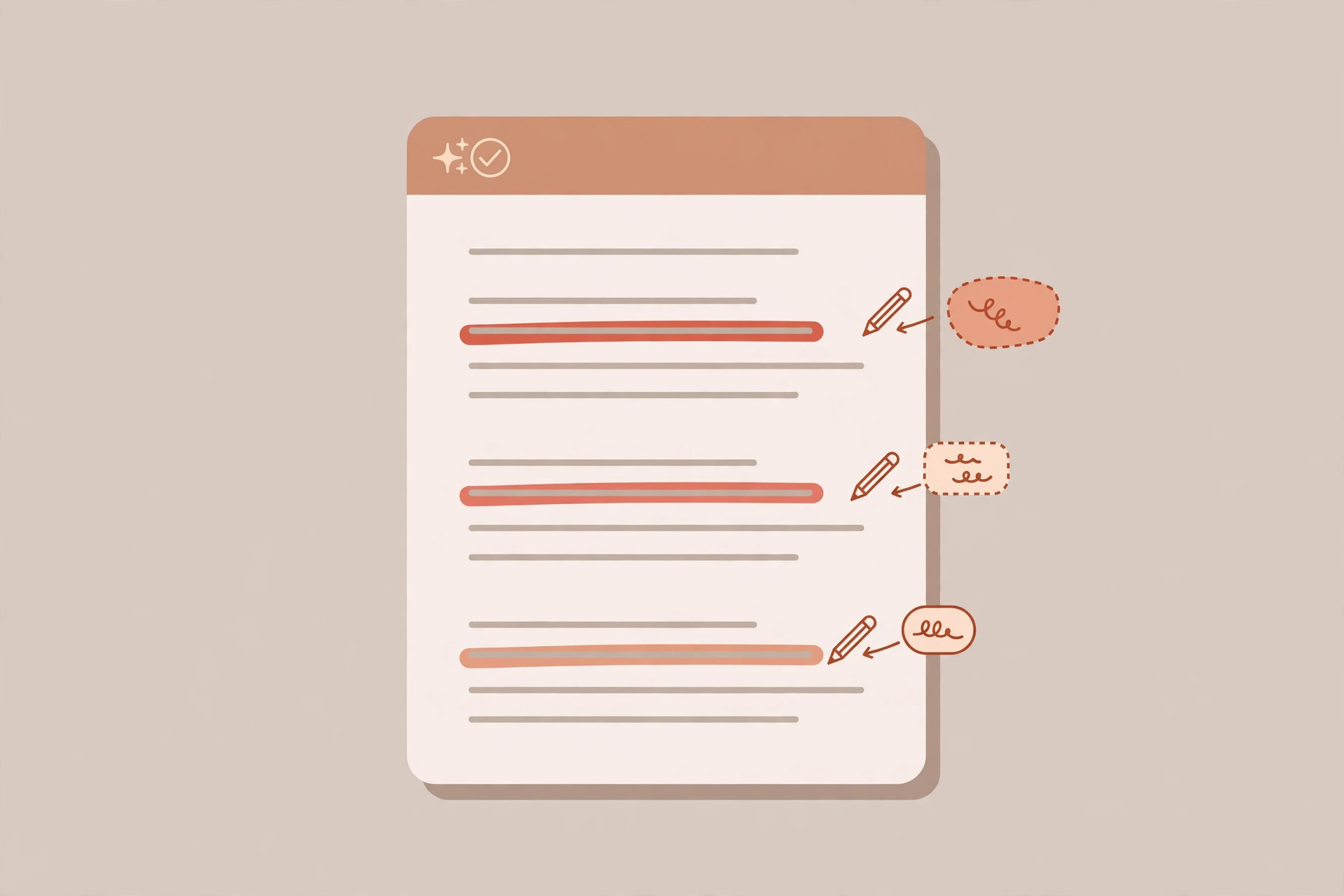
Every flagged phrase was highlighted in red in my own text — "delve into the landscape of AI writing," "let's dive in and leverage cutting-edge tools," "a tapestry of ideas that resonate" — and hovering each one showed the pattern name with a fix. Below the verdict sat a "Report for your AI" section with a Copy report button, generating a prompt-ready fix list ("Rewrite my text to fix each of these without changing…"). No login prompt, no email field, no counter ticking down appeared at any point. The nav bar does have Login/Sign Up links — for FeedHive's scheduling product — but the detector never asks you to touch them.
Not a detector — a style check
This is the tool's whole philosophy, and it's why it pairs rather than competes with a probability-based AI detector: detectors try to answer "did a machine write this?" — a question nobody can answer reliably, and one that invites false accusations. The Slop Detector answers the question you can actually act on: "which exact phrases make this read as slop, and what should I write instead?" One pattern alone passes; two or more different patterns stacked in a paragraph is where text starts to read as generic. That threshold matches how human editors actually judge prose.
The 120 patterns, open source
The full pattern list lives on GitHub under the MIT license (FeedHive/ai-slop-detector) — nine categories from vocabulary to LinkedIn-specific tics — and the repo ships an agent skill so Claude Code and Codex can check drafts against the list locally. You can also paste the list into any chatbot and ask it to avoid every pattern in what it writes next. The web tool is the convenient front door; the open list is the durable asset.
Free limits: what's actually free
Thirty checks a day, no account — that's the stated deal in the FAQ. During our test the interface showed no remaining-checks counter, so heavy users will discover the cap when they hit it rather than watching it approach. The check itself runs against an AI model server-side, which is why there's a daily cap at all. The 5,000-character input limit keeps each check to roughly a blog post or long email — plenty for the de-slopping job.
Best for
- Pre-publish polish: run a draft through before it goes out — posts, emails, essays, LinkedIn updates
- Learning the tells: the named patterns teach you what to avoid, which beats a black-box percentage
- Fixing, not just flagging: the copyable "Report for your AI" turns the diagnosis into a rewrite prompt
- Anyone burned by detectors: no authorship guessing means no false accusations against human writers
Limitations
- 30 checks a day: generous for humans, a wall for bulk pipelines — that's the point
- Server-side check: text is sent to an AI model; FeedHive says it isn't stored, but keep secrets out
- Pattern matching, not judgment: a deliberate stylistic choice can trip a pattern; read the highlights, don't auto-accept
- English-focused: the pattern list is built around English AI-writing tics
AI Slop Detector vs the alternatives
Against our Free AI Detector: not rivals — a pipeline. The detector scores how AI-like a draft reads sentence by sentence; the Slop Detector names the offending phrases and tells you how to fix them. Score first, diagnose second.
Against the Free AI Humanizer: the third leg of the loop. Detect, de-slop the flagged phrases, then humanize what's left. All three are free with no account.
Against metered "AI writing checker" SaaS: those bundle detection with subscriptions and dashboards you didn't ask for. This is one paste, one click, and the pattern list is open source — you can take the methodology with you.
FAQ
Is the AI Slop Detector really free with no sign up?
Yes. We pasted text and ran a full check in a clean browser with no account and no email — no login prompt appeared at any point. Its FAQ states it is free with no signup, up to 30 checks a day.
What is the difference between this and an AI detector?
An AI detector guesses whether a machine wrote your text and hands you a probability. The Slop Detector doesn't guess authorship at all — it checks for 120 named patterns that make writing read like AI slop, quotes each one in place, and suggests a fix. Humans write these patterns too, so it never accuses anyone.
What happens when text fails the check?
Our slop-heavy test paragraph came back "Rejected" with "10 different patterns found, 11 in total." Each flagged phrase — "delve into the landscape," "it's worth noting that," "in today's fast-paced world" — was highlighted in red, and a "Report for your AI" section offered a copyable fix-it report.
What is the daily limit?
30 checks a day, no account needed. The tool's interface didn't show a remaining-checks counter during our test; the limit is stated in its FAQ.
Does FeedHive store the text I check?
According to its FAQ, no — FeedHive doesn't save the text. It is sent to an AI model for the check and the result is shown only to you. As with any free web tool, don't paste anything truly sensitive.
Verdict
The AI Slop Detector is the rare writing tool that respects both the writer and the reader: it never accuses, it explains. Most free checkers give you a number to worry about; this one gives you a marked-up draft and a fix list. For the everyday job — a post that sounds a bit too laminated, an email that reads like it was assembled from templates — paste, check, fix the red lines, publish.
8/10. The diagnosis-first alternative to black-box AI detectors, free with no account. Pair it with the Free AI Detector for scoring and the Free AI Humanizer for rewriting, and you have a complete no-signup writing loop.
Open AI Slop Detector — no sign up →
Tested 2026-10-24 · Providers change their signup policies — we re-verify regularly.